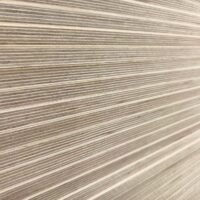
Plywood specifications often contain several technical classifications that can be difficult to interpret, particularly for buyers sourcing materials from different European markets.
A specification such as EN 314-2, CE2+, BB/BB, Class 3 Latvian Birch Plywood, 2440 x 1220mm, FSC® Mix 70% Certified describes several different characteristics of a plywood panel, including bonding quality, structural conformity, surface appearance, sheet dimensions and responsible material sourcing.
For plywood importers, distributors, furniture manufacturers and industrial users, understanding these specifications is essential when comparing products and evaluating suppliers.
This guide explains what each designation means, how the different classifications relate to one another, and what buyers should consider when selecting Latvian birch plywood.
1. What Makes Latvian Birch Plywood Different?
Latvian birch plywood is manufactured using thin birch veneer layers bonded together with adjacent layers generally arranged at right angles.
This cross-laminated construction contributes to the panel’s mechanical properties, dimensional stability and relatively uniform structure.
Birch is widely used in plywood manufacturing because of its dense wood structure, attractive natural appearance and suitability for various industrial processing applications.
Depending on its construction and technical properties, Latvian birch plywood can be used in:
- Furniture manufacturing and interior components.
- Industrial packaging and reusable transport systems.
- Vehicle and trailer flooring.
- Construction and building applications.
- CNC machining and precision-cut components.
- Laminated panels and specialist woodworking.
- Interior fit-outs and decorative applications.
The suitability of a particular panel depends on its thickness, veneer construction, adhesive system, declared performance and intended service conditions.
2. Understanding EN 314-2 Class 3 Bonding Quality
One of the important characteristics of plywood is the quality of the adhesive bond between veneer layers.
EN 314-2 is a European standard that establishes requirements for plywood bonding quality.
It identifies three principal bonding classes:
Class 1 – Dry Conditions
Designed for applications where the plywood is used under dry conditions and is not expected to experience significant moisture exposure.
Class 2 – Humid Conditions
Suitable for applications involving humid conditions, subject to the relevant standard requirements.
Class 3 – Exterior Conditions
Designed for bonding conditions associated with exterior exposure. The adhesive bond must meet the applicable testing requirements for Class 3.
Class 3 is particularly relevant when plywood may be exposed to changing humidity or moisture conditions.
However, there is an important distinction between exterior bonding quality and the weather resistance of an entire plywood panel.
Class 3 bonding does not automatically make plywood waterproof or guarantee unlimited outdoor durability.
Surface protection, edge sealing, wood species durability, construction details and installation conditions remain important factors.
For professional buyers, requesting supporting bonding test documentation is a more reliable approach than relying only on commercial descriptions such as WBP or waterproof plywood.
3. What Does CE2+ Mean for Structural Birch Plywood?
CE2+ is associated with the conformity assessment system for structural plywood under the European construction products framework.
It is particularly relevant to plywood manufactured and declared for structural applications under the applicable harmonised product standard.
The CE marking provides information about the product’s conformity with the applicable European requirements.
For structural plywood, buyers should pay particular attention to:
- Declaration of Performance (DoP).
- Product identification and intended use.
- Declared mechanical performance characteristics.
- Factory production control documentation.
- Applicable harmonised technical specifications.
CE2+ should not be confused with EN 314-2 Class 3.
These classifications address different aspects of plywood:
- EN 314-2 Class 3 identifies the adhesive bonding class.
- CE2+ relates to the conformity assessment requirements for structural plywood.
A plywood panel may have a specified bonding class, but its suitability for a structural application must also be assessed using its declared mechanical properties and relevant design requirements.
This distinction is particularly important for construction companies, building material distributors and structural plywood buyers.
4. BB/BB Birch Plywood: Understanding Surface Quality
BB/BB is a commonly used surface grading designation for birch plywood.
The first BB refers to one face of the panel, while the second BB refers to the opposite face.
This means both sides are classified as BB grade.
BB-grade plywood generally allows certain natural veneer characteristics and repaired defects within the applicable grading rules.
Typical characteristics may include:
- Repaired knots.
- Limited natural colour variations.
- Repaired veneer imperfections.
- Certain permitted surface defects.
- Generally consistent sanded surfaces within the agreed grading requirements.
BB/BB is often considered when both sides of a plywood panel require a reasonably consistent appearance.
It may be suitable for furniture components, interior applications and industrial processing where a uniform natural birch appearance is desirable.
However, surface grading should always be evaluated against the relevant grading standard and agreed quality requirements.
Different manufacturers may have different internal inspection procedures, so physical samples and approved reference standards are useful when establishing purchasing specifications.
5. Why Is 2440 x 1220mm a Common Plywood Sheet Size?
The dimensions 2440 x 1220mm are widely used in the international plywood and woodworking industries.
They are approximately equivalent to 8 x 4 feet, making them convenient for many manufacturing and processing operations.
This sheet format can be used in various production environments, including:
Furniture manufacturing
Standard sheet dimensions can simplify cutting plans for furniture panels, cabinet components, shelves and other parts.
CNC processing
The 2440 x 1220mm format is compatible with many industrial panel-processing workflows, depending on the machine’s working dimensions.
Construction and interior fit-outs
Standard-sized sheets can be incorporated into various panel-based construction and interior applications.
Industrial packaging
Plywood panels can be cut into components for crates, transport packaging and reusable industrial packaging systems.
For buyers, it is important to confirm actual sheet dimensions, thickness tolerances, squareness and flatness rather than relying solely on nominal dimensions.
6. FSC® Mix 70%: What Does This Certification Claim Mean?
Responsible sourcing has become an increasingly important consideration in international timber and plywood trade.
FSC® certification provides a framework for verifying the sourcing and chain-of-custody controls of forest-based products.
FSC Mix 70% is a product claim associated with the FSC Mix system.
It indicates that the product contains eligible FSC-certified and/or recycled material under the applicable FSC calculation rules, with a 70% claim.
The remaining material is subject to the applicable FSC controlled material requirements.
It is important not to interpret FSC Mix 70% as meaning that 70% of the product necessarily comes exclusively from FSC-certified forests.
For professional buyers, the following documents should be checked:
- Valid FSC chain-of-custody certificate.
- Supplier certification scope.
- Relevant product category and product group.
- FSC claim on sales and delivery documentation.
- Traceability throughout the supply chain.
A valid certificate alone does not automatically establish that every product supplied by a company can carry an FSC claim.
The specific product and transaction documentation must support the claim.
7. What Should Importers Check When Sourcing Latvian Birch Plywood?
A complete plywood specification is an important starting point, but experienced importers know that documentation and production consistency are equally important.
Before purchasing Latvian birch plywood, buyers should consider the following factors.
Veneer Construction
The internal veneer arrangement affects the mechanical characteristics and stability of the panel.
Buyers should understand the construction requirements and check for internal gaps, overlaps and other core defects according to the agreed quality standard.
Bonding Performance
Where EN 314-2 Class 3 is specified, buyers should request relevant test documentation and confirm that it corresponds to the actual product.
Surface Appearance
BB/BB grading should be checked on both faces. Buyers should establish acceptable limits for repaired defects, knots, colour differences and sanding quality.
Dimensional Accuracy
Sheet dimensions, thickness tolerance, squareness and flatness can influence manufacturing efficiency and material utilisation.
Mechanical Properties
For structural applications, declared bending strength, modulus of elasticity and other relevant performance characteristics should be reviewed.
Moisture Content
Moisture content can affect dimensional stability, processing and the performance of finished products.
Certification and Traceability
CE documentation and FSC chain-of-custody claims should be verified independently and matched to the supplied product.
These checks help reduce misunderstandings between manufacturers, importers and end users.
8. Class 3 Bonding Does Not Mean Every Application Is Suitable for Outdoor Use
This is one of the most frequently misunderstood points in plywood purchasing.
Although EN 314-2 Class 3 indicates an exterior bonding classification, it does not mean that the plywood is automatically suitable for every outdoor application.
The overall durability of a panel depends on several factors:
- Wood species and natural durability.
- Veneer quality and construction.
- Adhesive performance.
- Moisture exposure.
- Surface coatings and protective treatments.
- Edge protection.
- Installation and maintenance.
For applications involving continuous weather exposure, buyers should evaluate the complete panel specification rather than relying exclusively on the bonding classification.
This is especially important for construction, transportation and outdoor industrial applications.
9. How to Read a Complete Latvian Birch Plywood Specification
Consider the following example:
EN 314-2 CE2+ BB/BB Class 3 Latvian Birch Plywood, 2440 x 1220mm, FSC® Mix 70% Certified
Each part communicates different information:
| Specification | Meaning |
|---|---|
| Latvian Birch Plywood | Wood species and product origin description |
| 2440 x 1220mm | Nominal sheet dimensions |
| BB/BB | Surface grading on both faces |
| EN 314-2 Class 3 | Adhesive bonding classification |
| CE2+ | Structural plywood conformity assessment classification |
| FSC® Mix 70% | Applicable FSC certified sourcing claim |
A good purchasing specification should also include panel thickness, thickness tolerance, veneer construction, moisture content, mechanical performance where required, and relevant documentation.
The more clearly these details are defined, the easier it becomes to compare quotations and evaluate the consistency of different suppliers.
Conclusion
Latvian birch plywood is used across a wide range of furniture, industrial, construction and woodworking applications.
However, technical classifications should always be understood individually.
EN 314-2 Class 3 concerns adhesive bonding quality. CE2+ relates to structural plywood conformity assessment. BB/BB describes the appearance grade of both faces, while FSC Mix 70% identifies a specific responsible sourcing claim.
The 2440 x 1220mm sheet format provides a familiar dimension for many international manufacturing operations.
For importers, distributors and manufacturers, understanding these details is an essential step towards making informed purchasing decisions.
A well-defined plywood specification, supported by appropriate technical documentation, quality inspection and traceable certification, provides a much stronger basis for evaluating plywood than a product name alone.
Published by Latvian Birch Plywood Guide – an independent industry information resource covering birch plywood specifications, European standards, product quality and international sourcing.